

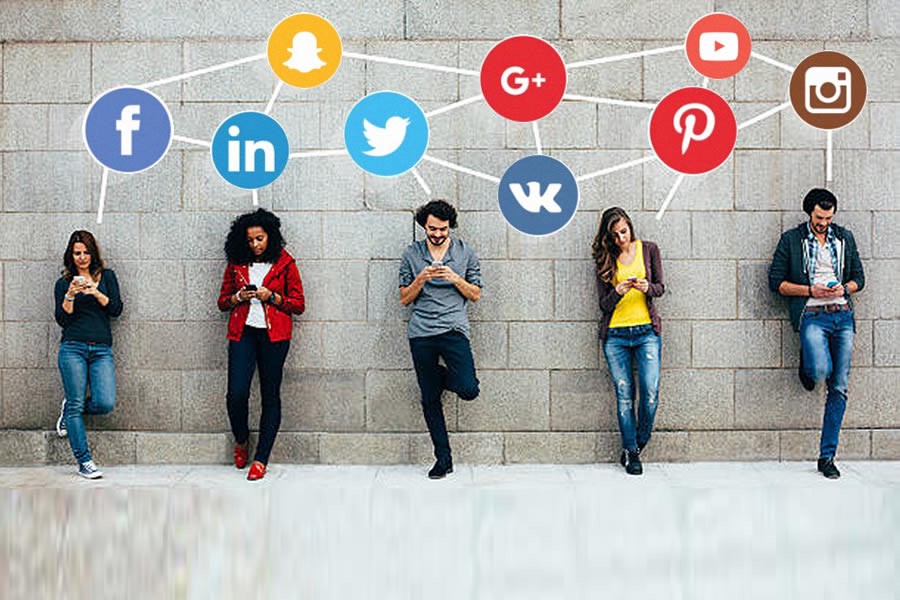

Social media platforms have transitioned from simple digital networking directories into highly complex ecosystems that govern modern communication, commerce, and culture. Initially designed to help individuals maintain personal relationships, these networks now function as central infrastructure for news distribution, corporate marketing, and community building. Understanding how these systems operate requires an analysis of human psychology, advanced data processing, and global economic incentives.
The widespread adoption of these applications has altered how information flows through society. Linear broadcasting models, where a few media outlets decided what the public consumed, have been replaced by decentralized dynamic networks. In this landscape, every participant acts as both a consumer and a potential publisher, creating unprecedented speed and scale in information exchange.
The Core Machinery of Algorithmic Curation
At the heart of the modern social media experience is the algorithmic feed. Early iterations of platforms organized content chronologically, showing updates in the exact order they were posted. As the volume of content grew, platforms realized users were overwhelmed by data, leading to the development of recommendation engines designed to sort and prioritize content.
These prediction engines rely on complex mathematical formulas to calculate the probability that a specific user will engage with a piece of content. The systems analyze thousands of data points every second to curate a unique stream of information for every individual.
Data Signals and Behavioral Tracking
To build a predictive profile, platforms continuously collect and analyze specific behavioral metrics. These metrics are generally divided into explicit signals and implicit signals.
-
Explicit signals include direct actions taken by the user, such as liking a post, leaving a comment, sharing a link, or clicking a subscribe button. These actions provide a clear indication of conscious interest.
-
Implicit signals are much more subtle but often carry more weight in the predictive calculation. The most critical implicit metric is dwell time, which measures the exact number of seconds a user pauses over a post while scrolling through their feed.
The system also tracks metadata, including the time of day a user is active, the geographic location of the device, the specific model of hardware being used, and the speed of the current internet connection. By combining these variables, the platform creates an optimization loop designed to maximize user retention.
Optimization for Engagement and Retention
The primary commercial objective of most social platforms is to keep users active within the application for as long as possible. Longer session durations mean more opportunities to display advertisements, which serve as the foundational revenue stream for the industry.
Consequently, recommendation engines favor content that triggers strong emotional reactions. Psychological studies indicate that high arousal emotions, particularly moral outrage, excitement, and curiosity, are the strongest drivers of human digital engagement. Content that evokes these responses spreads through networks at a significantly faster rate than neutral, nuanced information. This phenomenon shapes public discourse by elevating polarizing viewpoints and hyper simplified narratives over complex realities.
The Architecture of Digital Communities
While algorithms dictate what individuals see, the structure of social media allows for the formation of distinct digital subcultures and communities. These spaces provide individuals with a sense of belonging and validation, independent of geographical constraints.
Micro-Communities and Niche Networks
The democratization of publishing tools has led to the fragmentation of the digital public square into thousands of hyper specialized micro communities. Individuals who previously felt isolated due to rare interests, unique identities, or uncommon professions can now find hundreds of like minded peers instantly.
These spaces operate with their own social norms, specialized vocabularies, and internal hierarchies. They function as incubation chambers for ideas, memes, and cultural movements that frequently cross over into mainstream media and global consciousness.
The Echo Chamber Phenomenon
The combination of algorithmic personalization and the human tendency to seek confirmation of existing beliefs creates digital environments known as echo chambers. When users interact primarily with content and individuals that align with their worldview, the platform feeds them more of the same material.
Over time, this feedback loop filters out dissenting viewpoints and alternative perspectives. The consequence is a reinforcement of existing biases, where alternative arguments are not merely disagreed with, but are completely invisible to the user. This structural isolation reduces the capacity for constructive civic dialogue and accelerates ideological polarization across populations.
Economic Frameworks and the Creator Economy
Social media has completely transformed the media economics landscape by giving rise to the creator economy. This ecosystem allows independent operators to monetize their content production directly through global platforms without the need for traditional media gatekeepers like television networks or print publishers.
Monetization Vectors for Content Creators
Independent producers utilize several distinct channels to generate income from their digital presence. These methods have created a multi billion dollar industry that rivals traditional entertainment sectors.
-
Platform Ad Revenue Sharing: Several networks share a portion of the revenue generated from ads played before, during, or alongside a creator’s content. This relies entirely on high view counts and audience retention.
-
Direct Brand Sponsorships: Companies negotiate contracts directly with individuals to secure product placements or dedicated promotional segments within their regular content streams.
-
Fan Funded Models: Creators utilize subscription platforms to sell exclusive content, early access, and direct communication channels directly to their most dedicated followers.
The Shift in Modern Corporate Marketing
For corporations, social media has shifted marketing from a one way broadcast into an interactive dialogue. Traditional advertising mediums like billboards and television commercials offer limited targeting and tracking capabilities. Social media marketing allows companies to target precise demographics based on interests, behaviors, and buying patterns.
Furthermore, brands must now maintain an active, conversational identity online. Corporate accounts frequently adopt casual, human like personalities to build trust and rapport with younger consumers who are inherently skeptical of traditional corporate messaging.
Societal and Psychological Impacts
The integration of social platforms into daily routines has had measurable effects on human psychology, cognitive habits, and societal structures. These impacts present a complex mix of systemic benefits and systemic risks.
Cognitive Habits and Attention Spans
The design of modern feeds, particularly short form vertical video formats, relies on variable reward schedules. This psychological mechanism provides intermittent dopamine releases through unpredictable bursts of novel information, mimicking the mechanics of slot machines.
Continuous exposure to these rapid, short format content streams has raised concerns regarding human attention spans. Users become accustomed to instantaneous gratification, making sustained engagement with long form text, deep research, or slow moving tasks more challenging.
Mental Health and Social Comparison
The curated nature of social media presentations creates an environment ripe for upward social comparison. Users frequently compare their everyday realities with the highlighted, edited, and optimized depictions of other people’s lives.
This systemic distortion contributes to feelings of inadequacy, anxiety, and social isolation, particularly among teenage and young adult demographics. The constant pursuit of quantitative validation, measured via view counts, likes, and follower metrics, can tie personal self worth to volatile digital indicators.
Strategic Frameworks for Digital Balance
As awareness of the negative impacts of excessive platform usage increases, both individuals and institutions are developing strategies to establish a healthier relationship with digital networks.
Individual Curation Techniques
Users can actively counter algorithmic manipulation by taking conscious control of their digital environments. This practice involves auditing followed accounts, silencing non essential notifications, and intentionally engaging with content that challenges personal viewpoints to break algorithmic biases.
Setting strict time limits through device management tools helps re-establish boundaries between online activities and physical life. Transitioning from passive consumption to intentional, active communication can also reduce the psychological strain associated with endless scrolling.
Corporate and Institutional Responsibility
On an institutional level, there is a growing movement toward demanding greater transparency from technology corporations. Regulatory frameworks increasingly focus on data privacy rights, algorithmic accountability, and the protection of minor users. The future of social media will likely be shaped by the tension between corporate profit optimization and the collective well being of global societies.
Frequently Asked Questions
How do social media platforms maintain financial viability if they are free to use?
Social media platforms use an advertising business model where users pay for the service with their attention and data rather than currency. The platforms collect detailed behavioral and demographic profiles of their users, which they then sell to advertisers as highly targeted ad space. This system turns the user base into the product being sold to corporate buyers.
What is the difference between an algorithm and a network effect?
An algorithm is the specific set of mathematical rules and code used by a platform to sort, recommend, and display content to users. A network effect is an economic phenomenon where a platform becomes inherently more valuable to its users as more people join. For example, a communication app is only useful if your friends are also using it.
How do platforms detect and mitigate automated bot accounts?
Platforms employ specialized machine learning models that analyze behavior patterns to flag automated accounts. Bots typically display non human traits, such as posting at impossibly high frequencies, sharing the exact same text across hundreds of pages simultaneously, or following thousands of accounts without receiving any followers back. Device fingerprinting and behavioral analysis help systems isolate these accounts.
Why do some social media platforms prioritize vertical video over text formats?
Vertical video matches the natural orientation of modern smartphones, eliminating the friction of rotating the device. Additionally, video content combines visual motion, audio, and text, which holds human attention for significantly longer periods than text alone. This deeper engagement allows platforms to run more lucrative video advertisements.
What is the role of content moderation in maintaining platform stability?
Content moderation is the process of screening, monitoring, and filtering user generated content to ensure it complies with local laws and platform safety guidelines. It relies on a combination of automated artificial intelligence filters that scan for keywords or specific imagery, and large teams of human reviewers who evaluate contextually complex reports.
How does social media usage impact physical sleep patterns?
The blue light emitted by smartphone screens suppresses the human body’s production of melatonin, a hormone necessary for regulating sleep cycles. Furthermore, the psychological stimulation caused by engaging or controversial content right before bedtime keeps the brain in an alert state, delaying the onset of deep sleep.
What is data portability in the context of social networks?
Data portability is the legal and technical capability that allows a user to download their complete profile history, including posts, photos, connections, and messages, and transfer it to a competing platform. This concept is a core element of modern data privacy laws aimed at reducing monopoly control by major tech companies.
